The 1942 Canadian 5-cent coin came in two main varieties due to wartime material restrictions: a nickel composition coin and a tombac (brass) composition coin. The nickel version, weighing 4.54 grams with a diameter of 21.21 mm and plain edge, was magnetic and had a mintage of about 6,847,544 coins. The obverse featured a bust of King George VI, designed by Thomas Humphrey Paget, while the reverse displayed a beaver on a log, designed by G. E. Kruger-Gray. The tombac variety was introduced to conserve nickel for the war effort; it was a 12-sided coin (dodecagonal), non-magnetic, weighing the same as the nickel but slightly larger in diameter (21.3 mm across opposite corners), with a mintage of about 3,396,234 coins. The 12-sided shape helped distinguish the tombac 5-cent piece from the bronze 1-cent coin, as the tombac’s color was similar to the penny. Both versions have the inscription “GEORGIVS VI D : G : REX ET IND : IMP :” on the obverse and read “5 CENTS CANADA 1942” on the reverse.
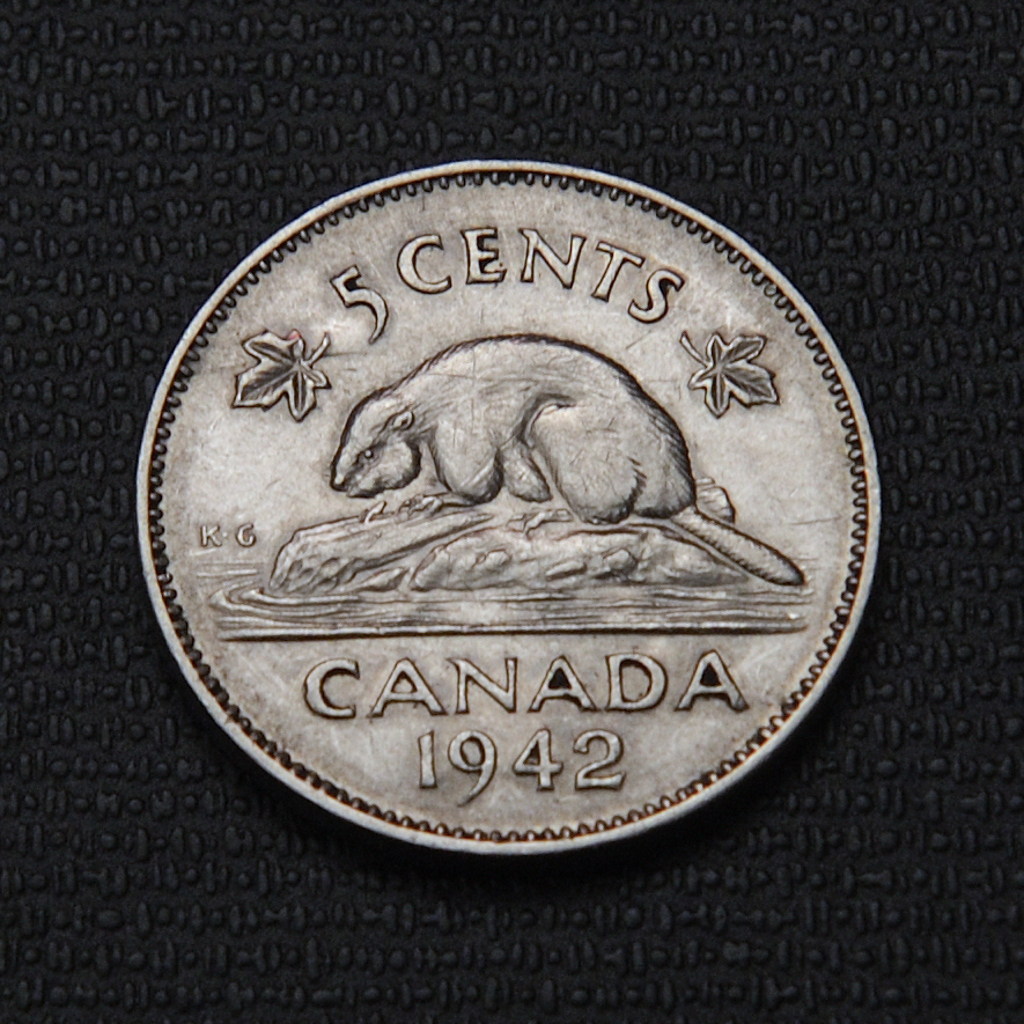
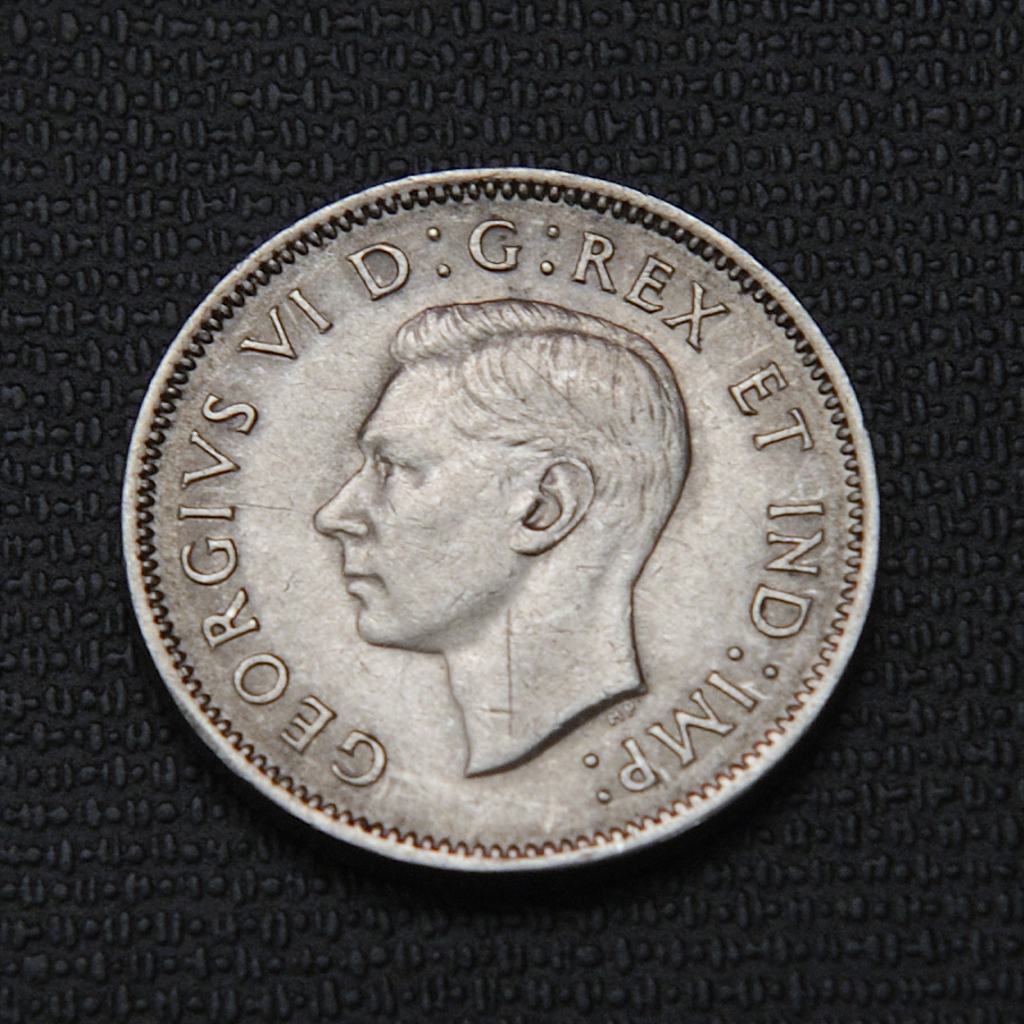
1942 – 5 Cents Canada – Nickel
Pièces 5 Cents du Canada$1.50
The 1942 Canadian 5-cent coin was issued in two varieties: one made of nickel with a smooth round edge and the other made of tombac (a brass alloy) with a distinctive 12-sided shape to distinguish it from the 1-cent coin, reflecting wartime metal conservation efforts during World War II. It features King George VI on the obverse and a beaver on a log on the reverse.
Disponibilité : En rupture de stock
Please login| Weight (g) | 4.54 |
|---|---|
| Axis | |
| Magnetism | |
| Mint by | |
| Mintage | 6847544 |
| Diameter (mm) | 21.21 |
| Thickness (mm) | 1,7 |
| Composition | 99% Nickel |
| Mint by | Royal Canadian Mint |
| Circulation | Circulated |
| Country | |
| Face Value | |
| Material | |
| Year |


