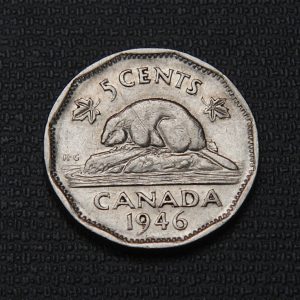
The 1942 Canadian 5 cents coin made of tombac was produced during World War II, when nickel was reserved for wartime production, resulting in a temporary switch to an alloy called tombac (composed mainly of copper and zinc). To help distinguish it from the similarly colored 1-cent coin, the tombac 5-cent coins featured a unique dodecagonal (12-sided) shape and a bright yellow-bronze appearance, with the reverse showing a beaver on a log and the obverse displaying King George VI. The coin was non-magnetic, weighed 4.54 grams, had a diameter of 21.3 mm, and a plain edge, with a total mintage of approximately 3.4 million pieces. This distinctive coin reflected Canadian ingenuity in response to wartime resource constraints and was highly recognizable in circulation at the time.
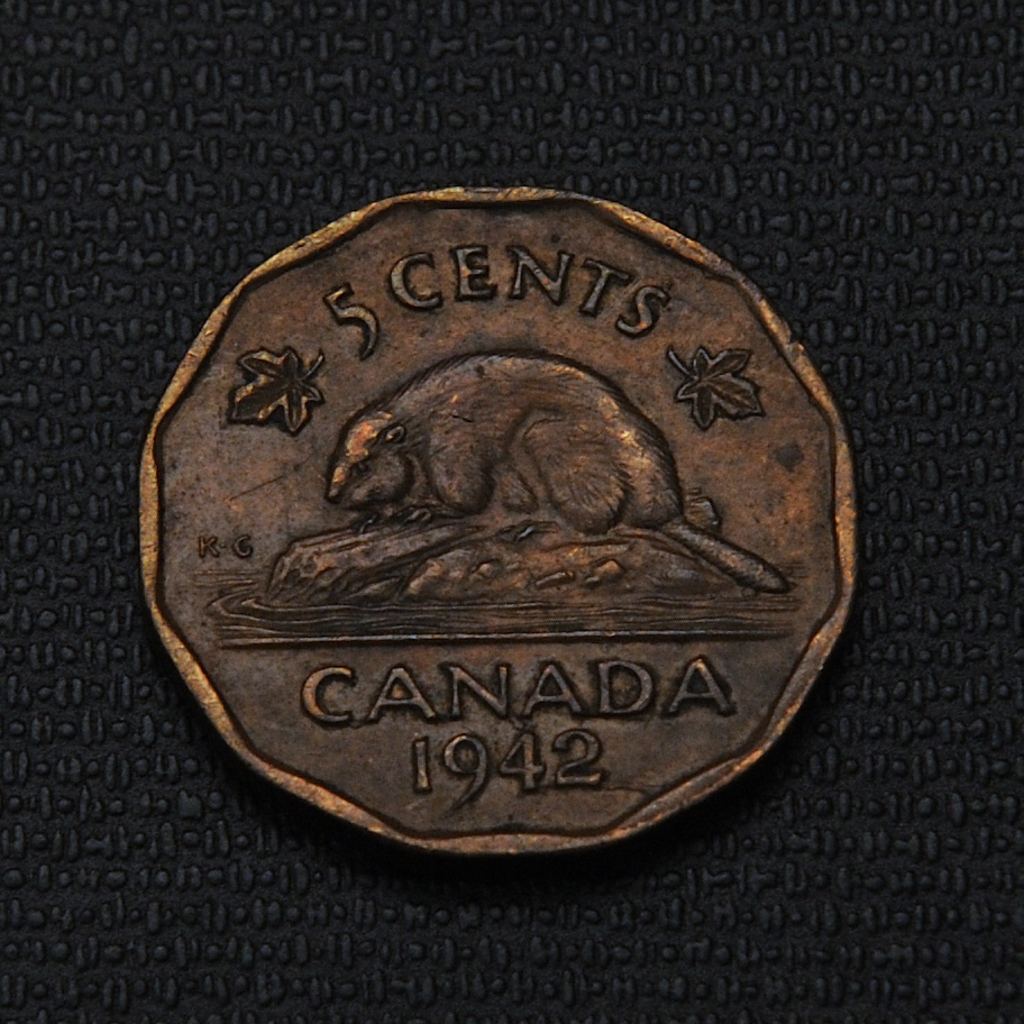
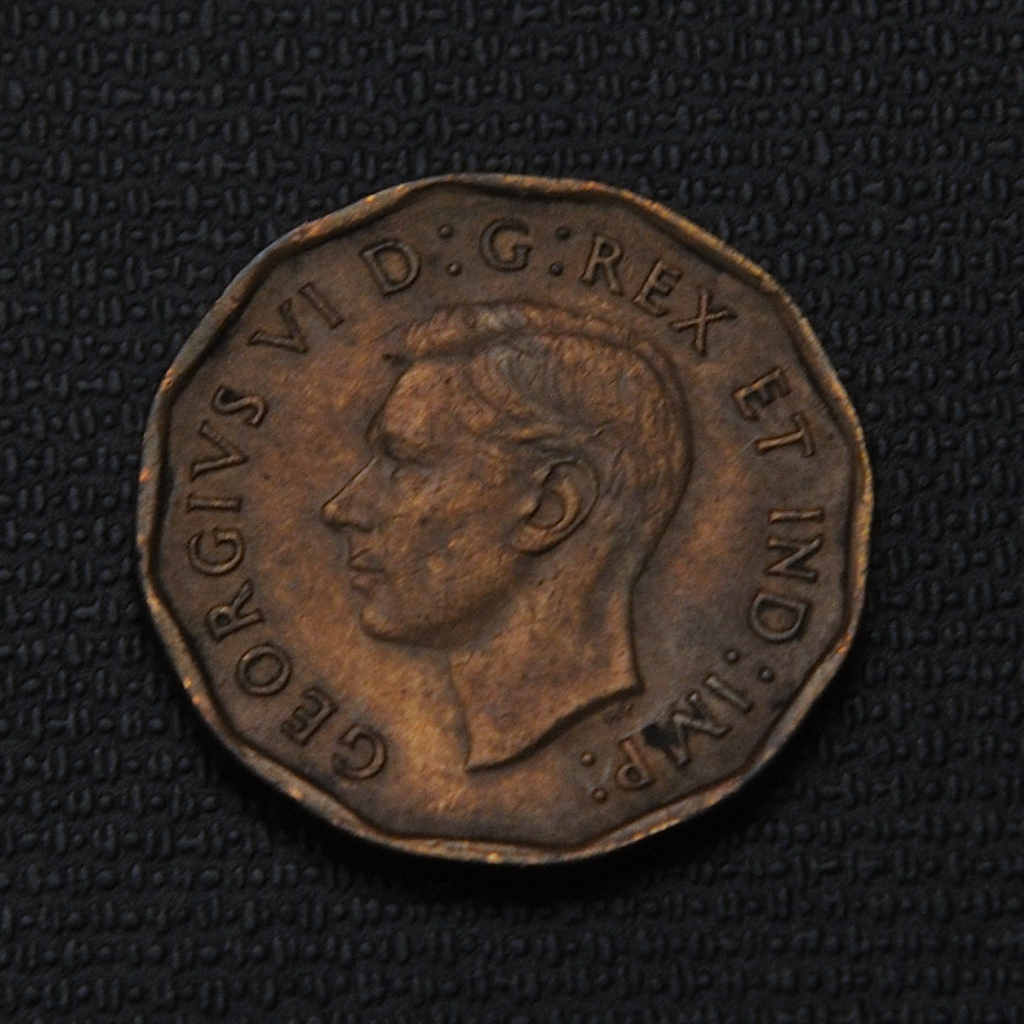
1942 – 5 Cents Canada – Tombac
Pièces 5 Cents du Canada$1.50
The 1942 tombac 5 cents coin is a 12-sided, brass-colored token with a beaver reverse, struck to conserve nickel for the war effort.
Disponibilité : En rupture de stock
Please login| Weight (g) | 4.54 |
|---|---|
| Axis | |
| Magnetism | |
| Mint by | |
| Mintage | 3396234 |
| Diameter (mm) | 21.3 |
| Thickness (mm) | 1,7 |
| Composition | 88% copper, 12% zinc |
| Mint by | Royal Canadian Mint |
| Circulation | Circulated |
| Country | |
| Face Value | |
| Material | |
| Year |