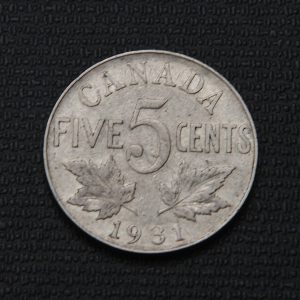
The 1943 Canadian 5 cents coin made of tombac is a unique wartime issue created due to the rationing of nickel during World War II. Instead of nickel, this coin was made from tombac, a brass alloy consisting of 88% copper and 12% zinc, and it features a distinctive dodecagonal (12-sided) shape to differentiate it from the bronze one-cent coin. The coin’s design replaced the traditional beaver image on the reverse with a large “V” symbolizing both victory and the five-cent denomination, accompanied by a torch in the center and an international Morse code message around the rim reading “We win when we work willingly.” The obverse displays the portrait of King George VI, and the coin has a plain edge, weighs 4.54 grams, and measures about 21.1 millimeters in diameter. This coin was produced only in 1943 and 1944 as a special wartime issue by the Royal Canadian Mint, designed by Thomas Shingles, and serves as a patriotic symbol from Canada’s World War II era.
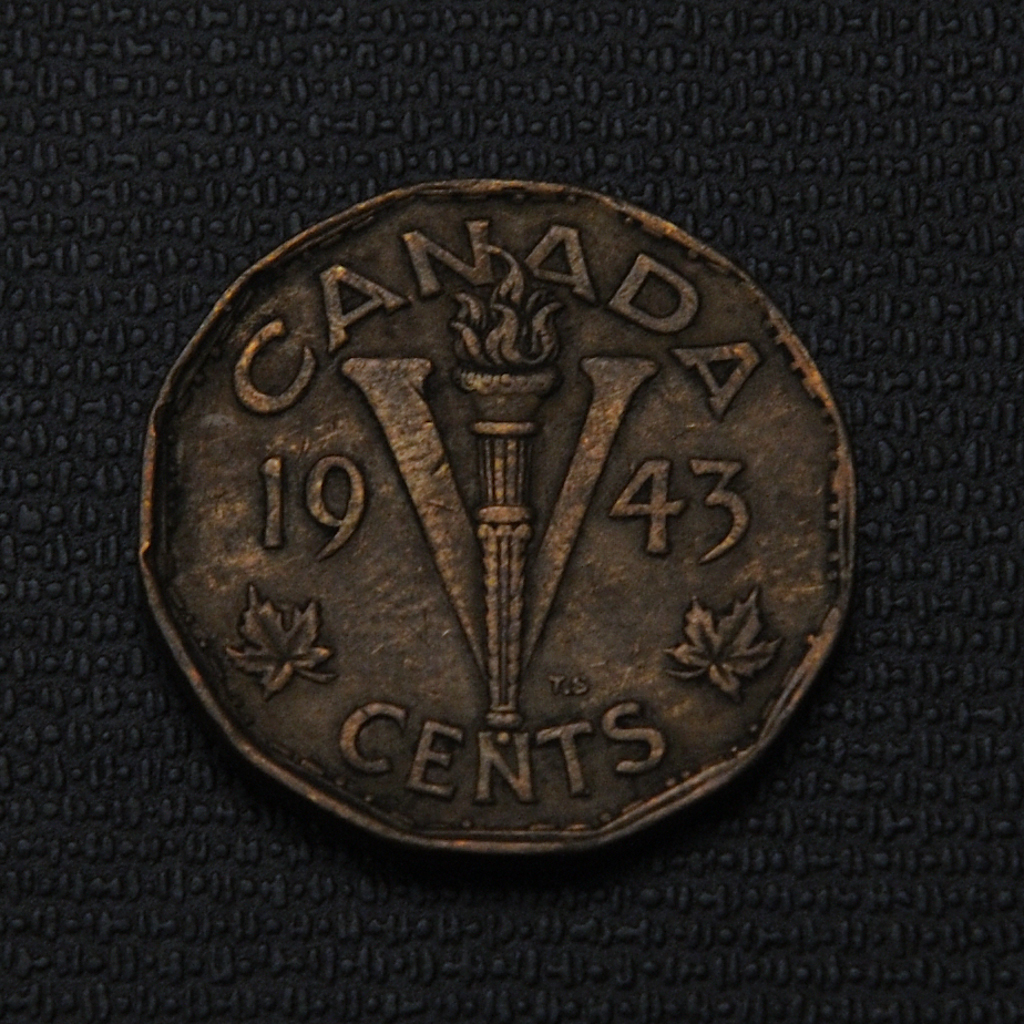
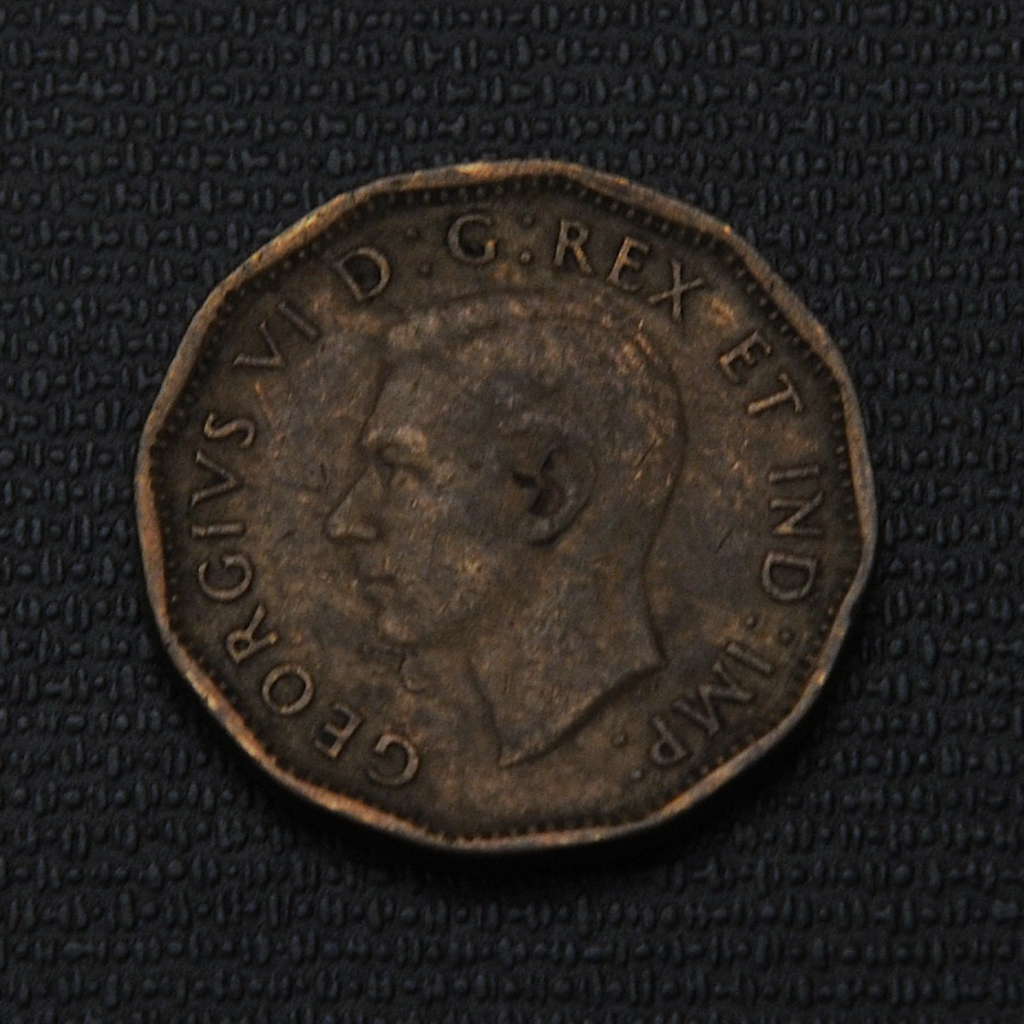
1943 – 5 Cents Canada – Tombac
Pièces 5 Cents du Canada$1.50
The 1943 Canadian 5 cents tombac coin is a distinctive 12-sided brass wartime coin featuring a victory “V,” Morse code message, and King George VI, minted due to wartime nickel shortages.
Disponibilité : En rupture de stock
Please login| Weight (g) | 4.54 |
|---|---|
| Axis | |
| Magnetism | |
| Mint by | |
| Mintage | 24760256 |
| Diameter (mm) | 21.3 |
| Thickness (mm) | 1,7 |
| Composition | 88% copper, 12% zinc |
| Mint by | Royal Canadian Mint |
| Circulation | Circulated |
| Country | |
| Face Value | |
| Material | |
| Year |